Why Reviews Matter More Than You Think
72% of patients use online reviews as their first step when selecting a provider. For cosmetic practices, where patients are making significant financial and personal decisions, your Google rating directly impacts consultation volume. A jump from 4.2 to 4.8 stars can meaningfully increase inbound inquiries.
The HIPAA-Compliant Review Request Process
The key constraint in medical review generation is HIPAA, you cannot acknowledge specific treatment details in responses or requests. The correct approach: send a general satisfaction survey after appointments, include a direct Google review link, and never mention specific procedures or conditions in the request.
If any of this sounds like your practice, start by checking whether AI search can see your site.
Timing Is Everything
The optimal time to request a review is 24–48 hours after a positive appointment, while the experience is fresh. Automated text or email sequences triggered by appointment status in your practice management software make this systematic and scalable.
Responding to Negative Reviews
Never ignore a negative review. Respond professionally within 24 hours, thank them for their feedback, and invite them to call the office to discuss, never acknowledge specifics of their care. This demonstrates professionalism to the hundreds of future patients reading your reviews.
Volume Beats Perfection
A practice with 4.7 stars and 200 reviews consistently outperforms one with 5.0 stars and 12 reviews. Volume signals to both Google and patients that your practice has extensive experience. Aim for consistent review generation as an ongoing process.
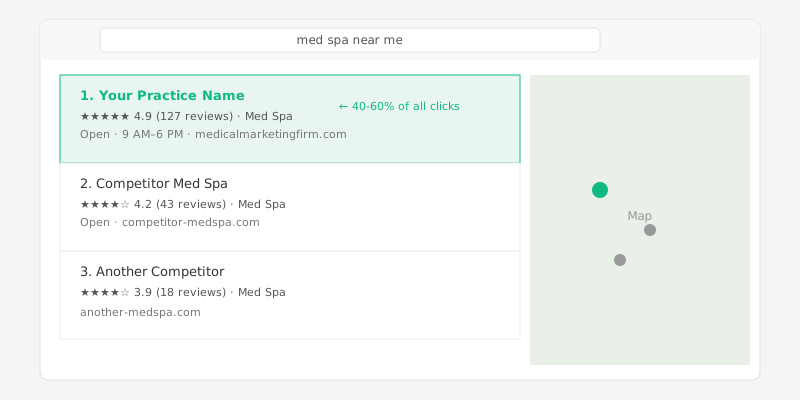
Practices with 100+ Google reviews and a 4.8+ rating consistently dominate the local map pack, capturing the majority of local patient searches.
The HIPAA-Compliant Review Request Process
Asking for reviews requires careful HIPAA compliance. You cannot reference the patient's specific condition or treatment in your review request, even saying "thanks for coming in for your Botox appointment" in a text message constitutes a HIPAA violation if sent without proper authorization. Keep review requests completely generic: "Thank you for visiting [Practice Name]. If you're satisfied with your experience, we'd appreciate a Google review." The request should contain no clinical information whatsoever.
Responding to Reviews: The SEO and Trust Impact
Responding to every Google review, positive and negative, signals to Google that your business is active and engaged, which positively impacts local search rankings. For positive reviews, a brief, genuine response takes 30 seconds. For negative reviews, respond professionally, take the concern offline ("please call our office at..."), and never include any patient-specific information in your response. Potential patients read negative review responses closely, a thoughtful, professional response to a negative review often builds more trust than ignoring it would destroy.
Get a free AI marketing audit and we'll audit your current marketing for free.
Get My Free AI Marketing Audit →